Advancing active mobility in greater Prince William, Virginia

Tag: VDOT (Page 1 of 2)

VDOT’s Support of Active Mobility Has Improved. Here’s What’s Still Lacking.

We submitted the following public statement in conjunction with Northern Virginia’s annual joint transportation agency public hearing held on October 20, 2025.  It’s our succinct assessment of VDOT’s support for active mobility in 2025.


Northern Virginia Joint Transportation Annual Public Hearing
Held on October 20, 2025 with a November 3, 2025 Deadline for Written Comments
Statement of Allen Muchnick, Member, Virginia Bicycling Federation and Active Prince William Boards of Directors

The Introduction to VDOT’s 2004 Policy for Integrating Bicycle and Pedestrian Accommodations states:

Bicycling and walking are fundamental travel modes and integral components of an efficient transportation network. Appropriate bicycle and pedestrian accommodations provide the public, including the disabled community, with access to the transportation network; connectivity with other modes of transportation; and independent mobility regardless of age, physical constraints, or income. Effective bicycle and pedestrian accommodations enhance the quality of life and health, strengthen communities, increase safety for all highway users, reduce congestion, and can benefit the environment. Bicycling and walking are successfully accommodated when travel by these modes is efficient, safe, and comfortable for the public. A strategic approach will consistently incorporate the consideration and provision of bicycling and walking accommodations into the decision-making process for Virginia’s transportation network.

We commend VDOT’s Bicycle and Pedestrian Program for several recent efforts to better implement this policy.

1) Last December, VDOT’s Northern Virginia (NoVA) District Office published its study of planned-but-unfunded active mobility infrastructure listed in the Transportation and Comprehensive Plans adopted by NoVA localities. That report identified 4,981 lane miles of planned-but-unfunded active mobility infrastructure throughout NoVA (see Table 5 on p. 17), the bulk of which (4,140 lane miles)–if built as standalone construction projects in 2022–would require a total of between $9.3 billion and $19.2 billion in funding (see Table 21 on p. 47).

2) VDOT’s statewide bicycle and pedestrian program is now tracking the completion of new bicycling accommodations on an annual basis. VDOT’s FY2025 Bicycle Facilities Metric Report identified 52 separate projects that added a total of 31.13 lane miles of new bicycle facilities within NoVA in the last fiscal year, with 10 lane miles in non-VDOT localities and 21 lane miles
on the VDOT road network (see Appendices G and H). Of those 52 projects, 16 projects collectively added 13.66 miles of shared-use paths, whereas 36 projects (including 13 roadway recongfigurations) added a total of 14.47 lane miles of bike lanes and 3.0 lane miles of shared-lane markings.

While those 31.13 lane miles of newly completed bicycle facilities within NoVA comprised 38% of the statewide total for FY2025, they equate to less than 1% of the roughly 4,000 lane-miles of the planned-but-unfunded bicycle facilities identified in NoVA locality planning documents.  Such a low documented completion rate calls for both a) increased funding and implementation of NoVA bikeway projects and b) expanded opportunities for VDOT roadway reconfigurations beyond Fairfax County.

3) VDOT’s statewide bicycle and pedestrian program has been progressively tracking Virginia’s statewide inventory of existing bicycle facilities and is now in the process of developing a statewide inventory of sidewalks and crosswalks that is expected to be completed by April 2026.

As VDOT’s Bicycle and Pedestrian Program reported in its July 2025 newsletter, “the bicycle facility inventory map displays 1,614 miles of shared-use path facilities, 986 lane miles of bicycle lanes…, 484 lane miles of shared lane markings and locally designated routes, and 7.5 miles of sidewalk connectors…”

It’s long past time, however, for VDOT’s Maintenance Division to establish a strategic and proactive asset management program for those active transportation assets under VDOT ownership–especially asphalt shared-use paths–to ensure safe and comfortable bicycling conditions for the traveling public.

Thank you for considering these comments.


Virginia Bicycling Federation’s 2025 Legislative Asks Presented to Prince William Legislators

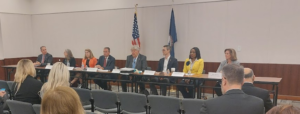
On December 19, 2024, the nine members of Prince William’s state legislative delegation depicted above held a pre-session town hall meeting to discuss their individual priorities for the coming legislative session and to hear from their constituents.  Active Prince William Co-Chair Allen Muchnick, who has also served on the Virginia Bicycling Federation’s board of directors since 1994, presented the statement below to summarize the Federation’s current state legislative priorities.


Prince William State Legislative Delegation Pre-Session Virtual Town Hall, December 19, 2024, Statement of Allen Muchnick, Virginia Bicycling Federation

Good evening.  I’m Allen Muchnick.  I live in the City of Manassas, and I’m a long-time board member of the Virginia Bicycling Federation.

In recent years, the Virginia Bicycling Federation has focused on reforming Virginia’s traffic laws to improve the safety and comfort of people bicycling on Virginia’s roadways.  Specifically, we have sought to remove dangerous and needless restrictions on bicycling two-abreast within a standard travel lane, to allow bike riders to treat stop signs as yield signs under limited circumstances, and to allow bike riders to start crossing a signalized intersection with the pedestrian Walk signal.  Between legislative sessions, we met with VDOT and State Police representatives to find common ground and iron out bill language, and our bills have been well supported by the House and Senate Democrats.   However, due to strong opposition emanating from the current Secretary of Transportation near the end of the 2024 session, we are not seeking such legislation for the coming Session.

Expanding the local authority for automated speed enforcement would be an effective way to reduce our current epidemic of traffic violence, especially pedestrian fatalities.  With the increased use of speed cameras in school zones across Virginia, support has grown to allow automated speed enforcement at any high-crash location.  We hope this expanded authority is enacted in 2025.

For the 2025 Session, the Virginia Bicycling Federation is currently seeking patrons to carry three pre-filed bills:

  • A bill to establish point-of-sale rebates for electric-assisted bicycle purchases has been pre-filed by Delegate Thomas, who patroned a similar bill in 2024.  E-bike rebates are currently in place in 10 states, and this bill, like others, would focus the rebate on low-income individuals.  E-bikes have been found to effectively replace many local motor vehicle trips and to expand mobility options for low-income households.
  • A second bill would tweak Virginia’s bicycling laws to overcome VDOT’s current objection to installing bicycle signals on two-way cycle tracks and shared-use paths.
  • Finally, we seek an authoritative study by JLARC (or possibly the Virginia Transportation Research Council) to prompt VDOT to adequately and proactively maintain its pedestrian and bicycle facilities. To this day, VDOT has no dedicated funding or asset management program to adequately maintain its pedestrian and bicycle facilities, and it’s been 22 years since JLARC last completed a comprehensive assessment of VDOT’s highway maintenance and operations programs.

Thank you for your consideration and for this public comment opportunity.


Hoadly Road Needs Proper Bike Lanes

We recently learned that the Prince William County Department of Transportation will soon conduct a Hoadly Road Planning Study to identify priorities for funding and then building segments of a continuous shared-use path (i.e., a 10-foot wide asphalt sidepath) along Hoadly Road, between the Prince William Parkway (Route 294) and Dumfries Road (Route 234).  Hoadly Road currently lacks any sidepath, except along the 0.4-mile segment between Dale Boulevard and Spriggs Road.

Active Prince William strongly supports establishing a continuous sidepath along at least one side of Hoadly Road, especially since such shared-use pedestrian facilities would link Prince William County’s two major sidepaths–along Routes 234 and 294.

However, the Mobility Chapter of the current Prince William County Comprehensive Plan (Pathways to 2040), which the Board of County Supervisors adopted in December 2022, is deficient in not also calling for on-road bicycle lanes along Hoadly Road (see page 73 here).

There is no inherent reason why highway corridors should include only one type of bicycle facility–e.g., only a sidepath–especially since conventional bike lanes can be retrofitted on multi-lane roadways much more quickly and inexpensively and since having both on-road and off-road bicycle facilities could best serve our highly diverse population of bicycle riders.   In addition, bike lanes are more readily and promptly cleared of snow and ice after winter storms.

Furthermore, bike-lane retrofits have the added benefits of reducing motorist speeding (by reducing travel lane widths) and of increasing the safety and comfort of people traveling on the sidewalks or sidepaths (by increasing the noise and wind buffer from vehicular traffic).

Hoadly Road currently has an excessively high design speed, a posted speed limit of 50 MPH, and poor pedestrian infrastructure.  Consequently, according to Virginia’s publicly searchable traffic crash database, over the past decade (2014-2023 calendar years), Hoadly Road was the site of 403 traffic crashes, 310 crash-associated injuries, and 4 traffic fatalities.  Retrofitted bike lanes on Hoadly Road would help alleviate those unsafe conditions for all modes of travel.

When widened some decades ago, Hoadly Road gained continuous wide paved shoulders that were well suited for bicycling, and at least some of those shoulder segments were subsequently marked as bike lanes.

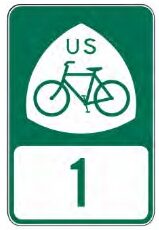
US Bicycle Route 1 (USBR 1) is a Maine-to-Florida bicycling route–primarily intended for experienced bicycle travelers–that has existed for decades.  USBR1 in Virginia, upon VDOT’s written application, was designated by the American Association of State Highway and Transportation Officials (AASHTO) back in 1982, more than 40 years ago.  Although USBR1 through Prince William County was originally aligned with Minnieville Road, between Old Bridge Road and Dumfries Road, VDOT and Prince William County largely failed to include appropriate bicycle facilities along much of Minnieville Road during the ensuing decades. as segments of Minnieville Road were sequentially widened to accommodate increased development and traffic.

More than a decade ago, VDOT commissioned a study by a transportation consulting firm to re-evaluate the routing of US Bicycle Route 1 through Northern Virginia, including Prince William County.  As a result of that study, USBR1 was officially realigned to follow a segment of the Prince William Parkway and all of Hoadly Road, to avoid the segment of Minnieville Road north of Cardinal Drive that still lacks bicycle facilities.

As noted on page 11 of that USBR1 realignment study report (emphasis added below):

Although less direct than the other alternatives, the recommended alternative (via Minnieville Road, Prince William Parkway, and Hoadly Road) offers a higher average BLOS [Bicycle Level of Service] (B), primarily the result of lower ADT [average daily traffic] and wider shoulders. The route segment along Minnieville Road and Prince William Parkway has high ADT (up to 45,000 vehicles per day), but also provides shared use paths or wide shoulders for much of the duration. Meanwhile, Hoadly Road has approximately 13,000 to 23,000 vehicles per day and provides 8‐foot shoulders along many segments.

Google Street View reveals that various segments of Hoadly Road currently do have marked bike lanes, but these are discontinuous and often inappropriately situated on the right side of long right-turn-only lanes, such as here, here, here, and here.   Glaring deficiencies in Hoadly Road’s “bike lanes” were noted by a resident back in 2010 [mislabeled a “bike path” in that blog post].

Since the entirely of Hoadly Road has been the designated alignment of US Bicycle Route 1 for nearly the past decade, Active Prince William asks that VDOT and Prince William County proactively collaborate to retrofit continuous and well-designed bike lanes–and, ideally, buffered or separated bike lanes–along all of Hoadly Road at the earliest possible opportunity.

We also recommend adding the planned Hoadly Road sidepath as a designated segment of the National Capital Trail Network (NCTN) when the National Capital Region Transportation Planning Board again updates its NCTN map in the coming year.

Our Statement At The VDOT NoVA District’s Spring 2023 Joint Transportation Meeting


Annual Joint Transportation Meeting for Northern Virginia, May 1, 2023
Statement of Allen Muchnick, Member of the Virginia Bicycling Federation
and Active Prince William Boards of Directors

Good evening.  I’m Allen Muchnick.  I live in the City of Manassas, and I serve on the boards of the Virginia Bicycling Federation and Active Prince William, statewide and sub-regional active transportation advocacy organizations, respectively.

We thank VDOT for recently re-filling its statewide bicycle and pedestrian planner position and for staffing a new statewide trails office.  We look forward to seeing those offices advance safe active mobility.  We believe it’s time to review and update both VDOT’s 2011 State Bicycle Policy Plan and the CTB’s 2004 Policy for Integrating Bicycle and Pedestrian Accommodations.

I commend VDOT’s NoVA District Office for initiating a study to estimate the cost to complete all locally planned but unfunded bicycle and pedestrian facilities within the NoVA District.  While most NoVA localities have robust active mobility plans and even Vision Zero programs, Prince William County still lacks both, so its official inventory of missing pedestrian and bicycle facilities is woefully incomplete.

Since 2010, VDOT’s roadway reconfiguration program has cost-effectively retrofit bike lanes and pedestrian crossing improvements on many dozens of roadways during scheduled resurfacing, especially in Fairfax County.  Prince William County, however, has largely ignored this enormous opportunity to improve the access and safety of its vulnerable road users.  We urge the County and VDOT to actively implement this program in our communities.

The alignment of US Bicycle Route 1 through Prince William County is a prime example where retrofitted bike lanes or paved shoulders are desperately needed.  Although AASHTO and VDOT established this route more than 40 years ago and a VDOT consultant re-evaluated the route’s alignment through NoVA nearly a decade ago, the bicycling conditions on several Prince William route segments are horrendous.  For example, the County’s online Bicycle Skill Level Map labels Old Bridge Road, part of Minnieville Rd, Aden Rd, and Fleetwood Dr—all lacking bicycle facilities and posted at 45-MPH–as “Roads to Avoid” and tags Hoadly Rd and Tanyard Hill Rd as “Low Comfort”.  VDOT’s 2015 Bicycle Level of Service Map for the NoVA District rated those segments similarly.  It’s long past time for VDOT and the County to fix these embarrassing and potentially deadly deficiencies.

To address the ongoing epidemic of pedestrian fatalities, VDOT should aggressively implement design-speed reductions and pedestrian safety improvements along its multi-lane commercial arterials.  VDOT and Prince William should also establish safer bike/ped crossings of I-95 and I-66 and extend the I-66 Trail, now being built in Fairfax County, over Bull Run to connect to both Balls Ford Rd and the Northern Virginia Community College’s Manassas campus.

In closing, we strongly support the recommended SMART SCALE, CMAQ, and RSTP awards for Manassas, Manassas Park, and Prince William County.

Thank you for this opportunity to comment.

###

Annual Northern Virginia Joint Transportation Meeting, Wednesday, December 15, 2021 at 7:00 PM

The Virginia Department of Transportation issued the following news release on November 22, 2021:

RELEASE:

CONTACT:

IMMEDIATE

Kathleen Leonard, VDOT | 703-638-9115
Haley Glynn, DRPT | 804-351-6647
Karen Finucan Clarkson, VRE | 571-255-0931
Erica Hawksworth, NVTA | 571-355-4661
Mathew Friedman, NVTC | 571-457-9516

NOVA-184807

Nov. 22, 2021

Learn about Agency Projects, Programs at Northern Virginia Joint Transportation Meeting Dec. 15

Join the Commonwealth of Virginia, Northern Virginia Transportation Authority, Northern Virginia Transportation Commission and Virginia Railway Express for a virtual public meeting

FAIRFAX–The public is invited to a joint virtual meeting on Wednesday, Dec. 15, 2021 with representatives from the Commonwealth Transportation Board, Virginia Department of Transportation, Virginia Department of Rail and Public Transportation, Office of Intermodal Planning and Investment, Northern Virginia Transportation Authority, Northern Virginia Transportation Commission and Virginia Railway Express, to learn more about the regional collaboration required to keep travelers in Northern Virginia moving.

Per Virginia code §33.2-214.3, these organizations shall conduct a joint public meeting annually for the purposes of presenting to the public, and receiving comments on, transportation projects proposed and conducted by each entity in Planning District 8 (Northern Virginia).

The meeting will include an opportunity to receive public comments following agency presentations on transportation initiatives, including:

  • VDOT’s Multimodal Project Pipeline Program
  • NVTA’s updates to TransAction and the FY2022-2027 Six Year Program; the NVTA Transportation Technology Strategic Plan; and the Regional Multi-Modal Mobility Program (RM3P) in partnership with the Commonwealth of Virginia
  • NVTC’s Commuter Choice program
  • DRPT’s funding opportunities, Six Year Improvement Program and the Virginia Passenger Rail Authority (VPRA)
  • VRE station, and storage- and maintenance-facility projects

The meeting will be held as a virtual/online and attendees must register online. The team of VDOT, DRPT, OIPI, NVTA, NVTC and VRE representatives will make a presentation beginning at 7 p.m. highlighting their transportation programs, regional collaboration and receive public comments about Virginia’s transportation network.

Comments may also be submitted through January 7, 2022 via this online comment form, by voicemail to 703-721-8270, by email to meetingcomments@vdot.virginia.gov (please reference “Northern Virginia Joint Transportation Meeting” in the subject line) or by mail to Ms. Maria Sinner, VDOT, 4975 Alliance Drive, Fairfax, VA 22030.

Meeting materials and presentations will be posted on this page.

About the Agencies

The Commonwealth Transportation Board (CTB), the policy board for the Virginia Department of Transportation, Virginia Department of Rail and Public Transportation, and the Office of Intermodal Planning and Investment, allocates public funds to highway, road, bridge, rail, bicycle, pedestrian, public transportation, and transportation demand management projects. Virginia’s SMART SCALE scores projects on factors of safety, congestion reduction, accessibility, land use, environmental quality, and economic development.

The Virginia Department of Transportation (VDOT) and the Virginia Department of Rail and Public Transportation (DRPT) are state agencies reporting to the Secretary of Transportation, focused on the movement of people and goods throughout the Commonwealth. VDOT is responsible for building, maintaining and operating the state’s roads, bridges and tunnels. DRPT’s primary areas of activity are rail, public transportation, and commuter services, working with local, regional, state, and federal governments, as well as private entities to support for projects and programs.

The Northern Virginia Transportation Authority (Authority) is a regional body that is focused on delivering transportation solutions and value for Northern Virginia’s transportation dollars by bringing NoVA jurisdictions and agencies together to plan and program regional multimodal transportation projects focused on relieving congestion.

The Northern Virginia Transportation Commission (NVTC) advances a robust and reliable public transit network to support communities in Northern Virginia.

The Virginia Railway Express (VRE) has been providing commuter rail service between Central and Northern Virginia and the District of Columbia since 1992. As a participant in the commonwealth’s $3.9 billion Transforming Rail in Virginia program, VRE has many station-improvement and maintenance-and-storage facility projects at various levels of implementation.

ctb.virginia.gov | virginiadot.org | drpt.virginia.gov | thenovaauthority.org | www.novatransit.org | www.vre.org | oipi.virginia.gov

VDOT ensures nondiscrimination and equal employment in all programs and activities in accordance with Title VI and Title VII of the Civil Rights Act of 1964. If you need more information or special assistance for persons with disabilities or limited English proficiency, contact VDOT Civil Rights at 703-259-1775.

END

« Older posts