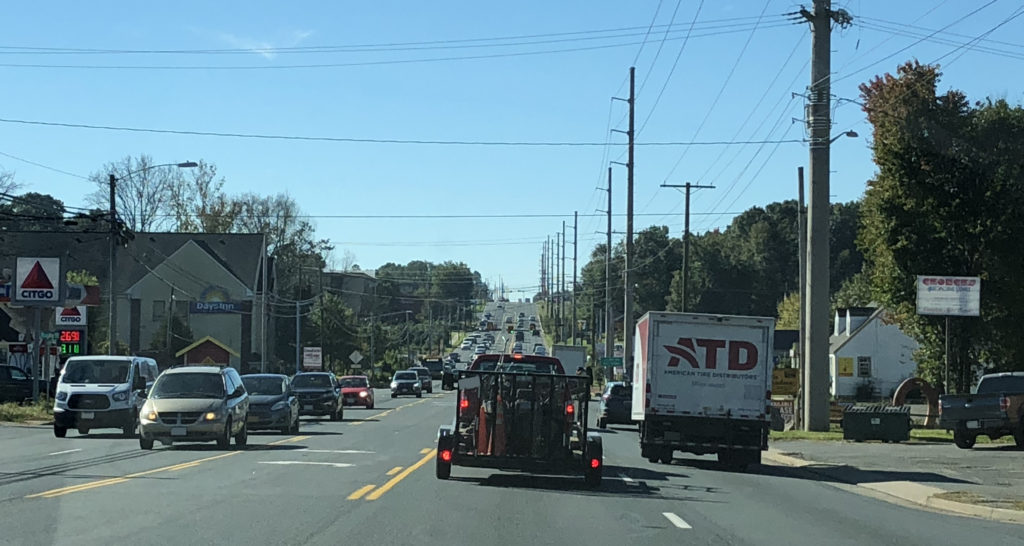
Active Prince William applauds the Prince William Board of County Supervisors (BOCS) for rejecting the Route 28 2B alignment on August 4 (see Agenda Item #10B, starting at 4:18 on the recorded video). We further agree that doing nothing to fix Route 28 through Yorkshire is not an option; however, widening Centreville Road itself by adding two general-purpose travel lanes would disrupt many businesses.
VDOT’s Centreville Road (Route 28) STARS (Strategic Targeted Affordable Roadway Solutions) Study, championed by Delegate Roem, recently recommended a $38 million package of intersection, raised median, and pedestrian improvements that–in the absence of general roadway widening–1) would significantly reduce intersection delays and expand vehicle capacity and pedestrian access along Route 28 and 2) was ripe to receive VDOT SMART SCALE funding for design and construction in spring 2021.
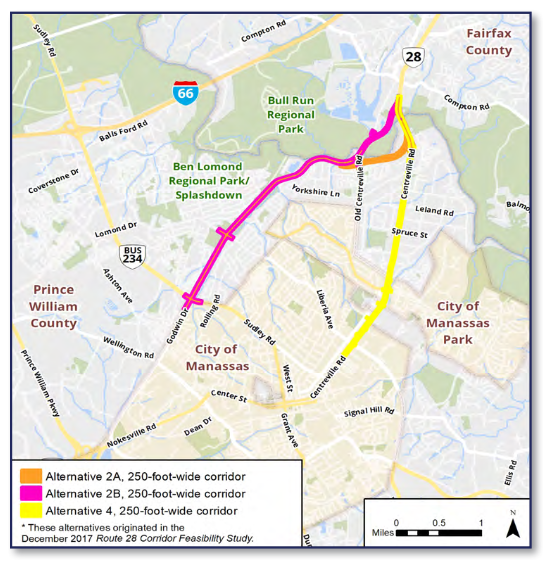
Unfortunately, proceeding with widening Route 28 itself through Yorkshire could make the sensible and cost-effective STARS Study recommendations infeasible. Therefore, we encourage the BOCS to explore an alternative approach, integrated with a new land-use plan (Small Area Plan) for economic development and revitalization along this corridor. Alternative 4 could be modified to include a new multimodal street just to the west, so highway investment could stimulate transit-oriented, mixed-use redevelopment of the properties between and fronting the existing and future sections of Centreville Road. Integrated planning could foster the creation of a vibrant new livable community with affordable housing at a key gateway to Prince William County.
At the peak of the lockdown period from COVID19 we witnessed an “extreme” effect on carbon emissions, causing a 17% drop globally. As our economy begins to recover and emissions begin increasing again, we are presented with an enormous opportunity for growth.
The clean energy sector has been one of the fastest-growing in recent years and Virginia is #10 in the number of clean energy jobs, with more than 78,000 Virginians working in the industry with more being created as we facilitate the transition to renewable energy.
Though the task seems overwhelming there are concrete, significant actions our County Supervisors and citizens can take right now, which would result in significant benefits for our environment and economy.
Our panel will feature:
Jay Fisette, former Chair of Arlington County Board & Managing Principal, DMV Strategic Advisors.
Steve Walz, Director, Environmental Programs at Metropolitan Washington Council of Governments
Taylor Brown, Chief Technical Officer at Sun Tribe Solar
Tune it to find out about…and discuss these questions and more:
What localities are leading our region on climate action?
Do we need a community-wide climate plan?
Do citizens have a role?
What specific actions can our local leaders take this year?
Should the County and Schools work together?
Please register and you will receive the zoom link the day prior to the webinar.
Invite your local leaders to help inform and educate them on how they can act on climate right now!
Co-hosted by: Mothers Out Front, The Greater Prince William Climate Action Network, Youth Climate Action PWC, Active Prince William, Sierra Club – Virginia, Earth Rise Indivisible, The Climate Reality Project, Food & Water Watch.
Route 28 Alternatives Studied in the 2018-2020 Environmental Assessment
Prince William County (PWC) needs a Department of Mobility, not a Department of Highway Paving. Since the Shirley Highway reached the Occoquan River in 1949, we have paved and paved, at great expense to the environment and taxpayers. Has traffic congestion been eliminated? The answer to this is ‘no’. Expanding highways is not the answer to creating livable communities with sustainable transportation.
Under the last Board of County Supervisors, the scheme was to keep building new roads and widening old roads. Everyone knew it would not “fix” the highways, but land speculators could get rezonings for building new subdivisions if the county would plan to pave more roads. Expanding roads will not solve congestion; that is a lesson learned from several decades of previous road projects in the region and across the country. However, if the county’s land use planning remains isolated from transportation planning, we will just keep repeating the old mistake. A citizen-led Multi-Modal Transportation Advisory Commission, similar to those in Fairfax and Arlington Counties and the City of Alexandria, could increase transparency and citizen involvement in determining how PWC will grow and its residents, workers, and visitors will travel.
So, what is Plan B, if “build roads, build new houses, create new congestion, build roads, build new houses…” does not work? The County’s Strategic Plan is clear – build live-work-play communities that locate housing together with stores and offices, so people can walk, and bike, more rather than drive everywhere for daily living. Invest in increasing the number of jobs within Prince William, rather than fund more roads that incentivize long commutes. We need smart growth planning.
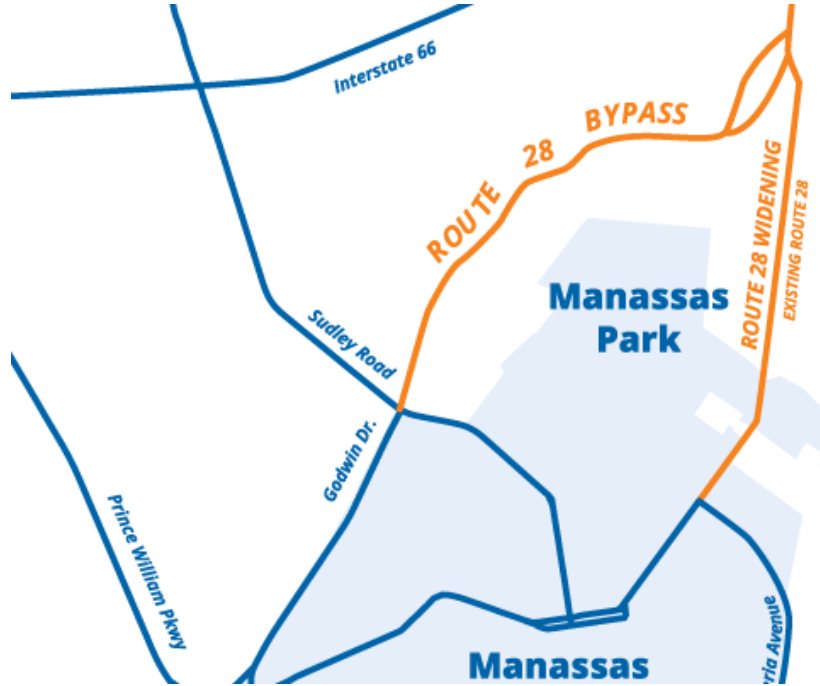
Sadly, on August 4 the supervisors are considering a proposal that would repeat the mistakes of the past. They could approve Alignment 2B of the Route 28 Bypass/Godwin Drive Extension, to build a new commuter highway through the flood-prone Flat Branch stream valley. At least fifty-four homes would be destroyed, and many more would be degraded by increased traffic noise and air pollution.
A community with affordable housing, including a trailer park, would be disrupted so commuters from Fauquier and other counties can temporarily drive a bit faster through PWC. Over six acres of wetlands would be filled in, impacting the natural environment and resilience to climate change. A noise wall would be constructed from Sudley Road to Bull Run, blocking all potential bike/pedestrian access across the highway barrier except at a Lomond Drive intersection.
The traffic analysis report (check the tables on pp. 23-24, and p. 40 for Godwin Dr and for Rte 28 in Fairfax County) indicates that the Alternative 2B commuter Bypass road would create clogged, “failing” intersections on existing Godwin Drive, at all four new Godwin Dr Extension intersections, and along Centreville Rd in Fairfax County (between the north end of the Bypass and I-66). If this Bypass is approved, a future “Fix Godwin Drive” campaign will require even more funding – hundreds of millions for more highway paving. New flyover ramps might have to be added to the interchange of Route 28 and Prince William Parkway/Route 234 Bypass, and Godwin Dr between Nokesville Road and Sudley Road would need widening and intersection improvements . This is not a smart growth approach.
Residents of Prince William County need a government that uses smart growth principles to guide future land use and transportation decisions. Prince William County residents want livable communities that are great places to work, live, play, and raise a family. Prince William County residents want a sustainable environment that provides a resilient approach to the effects of climate change.
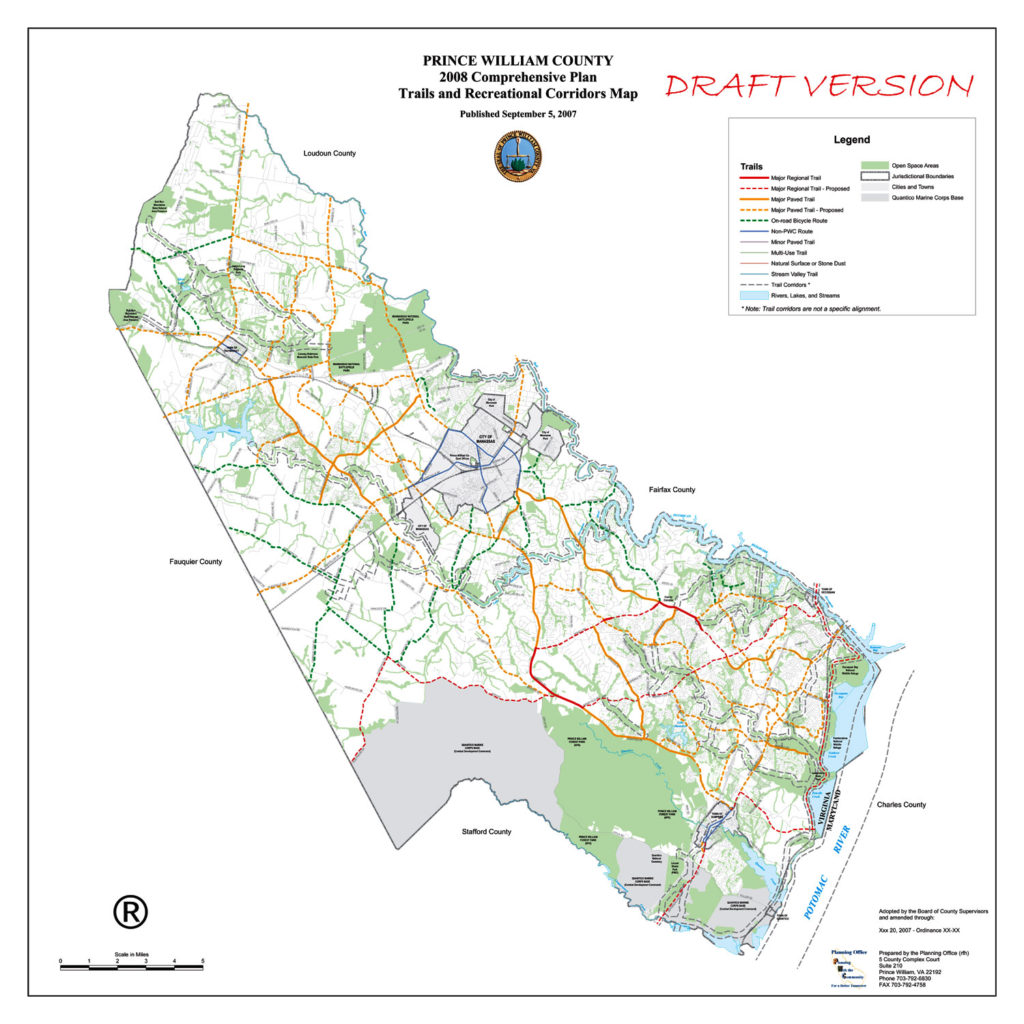
Proposed Prince William County Trails Network from 2007
1) Establish Citizen Transportation Advisory Commissions for Prince William County, Manassas, and Manassas Park.
2) Provide
Meaningful and Robust Public Participation Processes for the Coming
Comprehensive Plan Updates for the County and Cities.
3) Expand and Enhance Public Transportation as an Effective Travel Choice:
a) Add midday, evening, and reverse-commute VRE trips, possibly as shortened runs to/from Alexandria and/or Springfield/Franconia.
b) Add local and commuter bus service along Rte 28 and Sudley Rd, ideally in dedicated lanes.
c) Extend Richmond Hwy BRT south through Prince William County along the Rte 1 corridor to Quantico.
4) Build Complete Streets, especially a Primary Bikeway Network that Crosses Major Barriers (e.g., rivers, freeways, land parcels):
a) Build a continuous “I-66 Trail”, largely along Balls Ford Rd and across Bull Run into Fairfax County.
b) Build a quality bike/ped crossing of I-66 at or near Sudley Rd/Bus 234. In short term, ensure space for paths beneath all new I-66 overpasses of Sudley Rd.
c) Retrofit quality bike/ped crossings of I-95, especially at/near Prince Wm Pkwy/Horner Rd and at/near Dale Blvd/Opitz Blvd, but also at/near Rte 123, 234, & Joplin Rd.
d) Complete a continuous trail along Rte 234, from Rte 1 to I-66, including the totally missing segment between Brentsville Rd and I-66.
e) Include quality bike/ped access along and across Flat Branch and Bull Run in the proposed Godwin Dr Extension (Rte 28 environmental assessment).
f) Improve US Bike Route 1, a Maine-to Florida bikeway: Retrofit paved shoulders along Aden Rd (Joplin Rd to Fleetwood Dr) and Fleetwood Dr (Aden Rd to Fauquier line), fix the Hoadly Rd bike lanes, and sign all of USBR1 in PWC. Plan and create a paved shared-use path along the perimeter of Quantico Marine Corps Base as a long-term project.
g) Improve bike/ped crossings of Bull Run and the Occoquan River, including at Old Centreville Rd/Ordway Rd, Rte 28, Yates Ford Rd, I-66 Trail (connect Balls Ford Rd to Bull Run Dr), and Rte 1.
h) Improve bike/ped access along the Rte 29 corridor (Bull Run to Fauquier line).
i) Establish continuous ped/bike access along Old Bridge Rd.
j) Plan and develop a bikeway and trail network in Manassas Park.
5)Develop
Livable, Walkable, and Vibrant Transit-Oriented Communities:
a) Plan to revive aging suburban retail corridors and malls for higher-density, mixed-use, bus-transit-oriented redevelopment (e.g., Manassas Mall and the Sudley Rd corridor, Rte 28 in Yorkshire, Rte 1, Dale Blvd, Old Bridge Rd).
b) Remove or scale back all or part of numerous proposed road widenings from the Comprehensive Plan, including Brady’s Hill Rd, Carver Rd, Catharpin Rd, Dale Blvd, Dumfries Rd, Farm Creek Dr, Featherstone Rd, Gideon Dr, Godwin Dr Extension, Gordon Blvd, Groveton Rd, Gum Springs Rd, Horner Rd, Lucasville Rd, Manassas Battlefield Bypass, Neabsco Rd, Old Centreville Rd, PW Pkwy, Signal Hill Rd, Station Rd, Sudley Manor Dr, Sudley Rd, Rte 15, Rte 29, Rte 55, and Wellington Rd.
c) Innovation Town Center: Plan and develop a robust pedestrian and bicycle network, including a high-quality connection to the north side of the expanded Broad Run VRE Station.
6)Operate a Vibrant Safe Routes to School Program:
a) All new public schools, including the 13th high school, should be walkable and bikeable and include quality bicycle parking accommodations.
7)Make
Walking and Bicycling Safer:
a) Improve pedestrian crossings of multilane arterials (e.g., add missing pedestrian crossing signals, Leading Pedestrian Intervals, conspicuously marked crosswalks, sidewalk bulb outs, and/or streetlights; remove Right-Turn-Only Lanes).
b) Retrofit missing sidewalks along arterial roadways and on walk routes to schools and transit.
c) Provide a signed detour when pedestrian or bicycle facilities are closed for construction or maintenance activities.
8)Build a Comprehensive Recreational Trails Network:
a) Complete the East Coast Greenway/Potomac Heritage National Scenic Trail shared-use path through PWC, generally between Rte 1 and the Potomac River.
9)Improve
VRE Bicycle Access:
a) Provide covered bicycle parking and rental bicycle storage lockers at every VRE station in Prince William County, Manassas, and Manassas Park.
b) Improve bike/ped connections to VRE stations from all directions, including the expanded Broad Run station (including the Broad Run Trail), to improve bike/ped access to VRE from Bristow, the Landing at Cannon Branch, and Innovation Town Center.
c) Expand VRE bike-on-rail access (long capped at 34 bikes on 17 daily trains).
Join State Senators Scott Surovell and Jeremy McPike and State
Delegates Luke Torian and Jennifer Carroll Foy for a town hall meeting
to discuss the 46-day 2019 session of the Virginia General Assembly,
which is now well underway.